
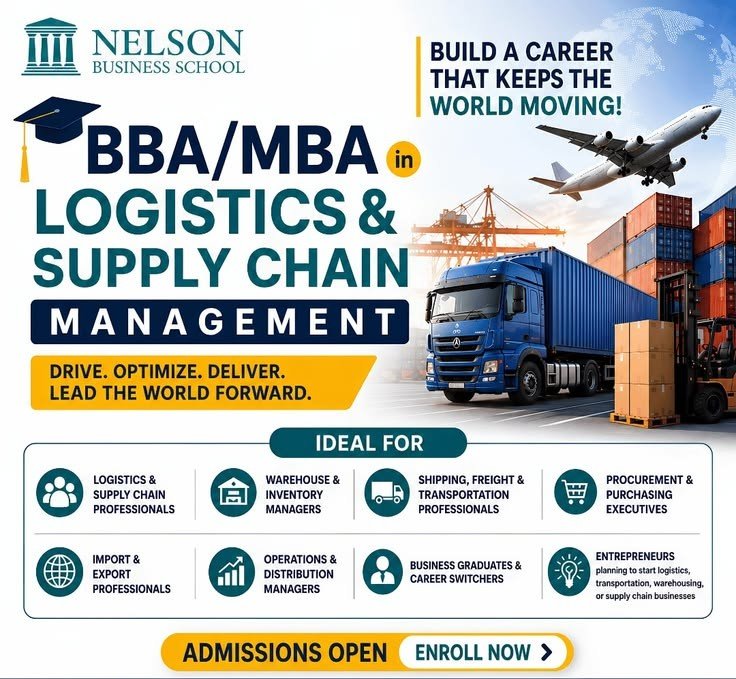
MBA in Supply Chain and Logistics Management | Advance Career
Supply Chain and Logistics Management: Build the leadership, analytics, and operations skills needed to manage modern supply chains from end to end. MBA in Supply Chain and Logistics Management | Advance Career.
An MBA in Supply Chain and Logistics Management prepares you for high-impact roles in procurement, logistics, warehouse operations, demand planning, and supply chain strategy. Designed for professionals who want to move into management, this program combines business leadership with practical supply chain knowledge.
Why Choose MBA with us?
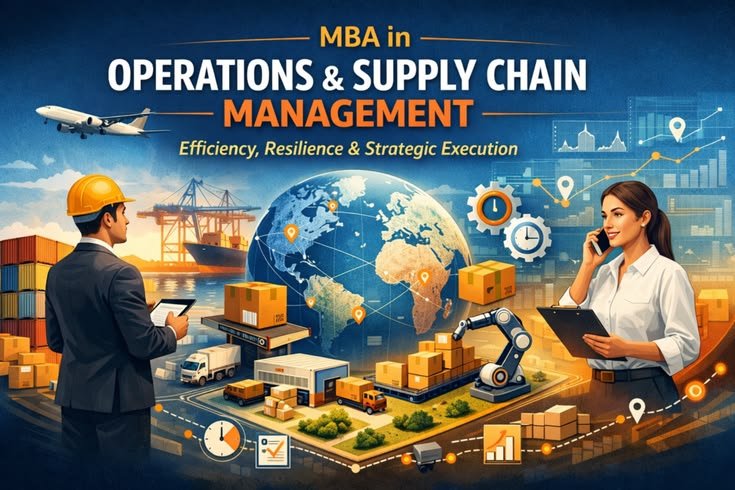
Driving Efficiency from Source to Delivery.
This program helps you understand how products, information, and resources move across global networks, while also developing the business skills employers value most. You will learn how to improve efficiency, reduce costs, strengthen supplier relationships, and support smarter decision-making.
Key benefits include:
- Leadership training for operations and logistics teams.
- Practical knowledge in procurement, inventory, distribution, and transportation.
- Analytical skills for forecasting, planning, and performance improvement.
- A strong foundation in global supply chain management and business strategy.
What You Will Learn
The curriculum is built to cover the core areas of supply chain and logistics management, including planning, sourcing, warehousing, distribution, and risk management. Depending on the program, you may also study supply chain analytics, network design, forecasting, and digital tools used in modern logistics. MBA in Supply Chain and Logistics Management | Advance Career
Typical topics include:
- Supply chain strategy.
- Logistics and distribution management.
- Procurement and sourcing.
- Warehouse and inventory management.
- Transportation and global trade.
- Supply chain analytics and forecasting.
- Risk management and process improvement.
Career Opportunities
Graduates can pursue roles across manufacturing, retail, e-commerce, consulting, transportation, and international trade. Common job paths include supply chain manager, logistics manager, procurement manager, operations manager, inventory planner, and demand planning specialist.
This MBA is a strong fit if you want to:
- Move into a leadership role in operations or logistics.
- Strengthen your business profile with specialized supply chain expertise.
- Work in industries that depend on efficient global movement of goods.
- Build a career in a field where strategy and execution both matter.
Who Should Apply
This program is ideal for working professionals, recent graduates with business experience, and career changers interested in operations, logistics, and supply chain leadership. It is especially useful for people who want to combine managerial skills with practical knowledge of how supply chains operate.
Admission Highlights
Applicants are typically expected to have a bachelor’s degree and a strong interest in business, operations, or logistics. Some programs may also prefer or require professional experience, especially for executive or online MBA formats.
Take the next step toward a career in supply chain leadership. Apply now for the MBA in Supply Chain and Logistics Management and prepare to lead in a fast-moving global business environment.
MBA in Supply Chain and Logistics Management, supply chain MBA, logistics management MBA, MBA in logistics, MBA in supply chain management, operations management MBA, procurement and logistics MBA, global supply chain MBA
What is an MBA in Supply Chain and Logistics Management?
It is a business degree focused on managing sourcing, procurement, logistics, distribution, and supply chain strategy.MBA in Supply Chain and Logistics Management | Advance Career
What careers can I get after this MBA?
You can pursue roles such as supply chain manager, logistics manager, procurement manager, operations manager, and demand planner.
Is this degree useful for global business roles?
Yes. The program builds skills in international logistics, distribution, forecasting, and supply chain decision-making.
Leave a Reply